Education Enrichment Programme : Drama : 狂言「附子」, Kyōgen 'Busu' in English
今回は、国際コースのプログラムの一つである"Education Enrichment Programme"の内容をお届けします。
校外へ出かける代わりに、慣れ親しんでいる学校内で、国際コースはゲストのドラマ講師による特別ワークショップを受けました。
今回のセッションでは、「英語を使った表現・創造性・コミュニケーション」を伸ばすことを目指しました。
活動では、日本の伝統的な喜劇である狂言に挑戦しました。 演目は「附子(ぶす)」で、これを英語版にアレンジして上演しました。
生徒たちはまず物語の流れをつかみ、その後、グループごとにユーモアや表情のつけ方、間の取り方を工夫しながらオリジナルの脚本を作成しました。
仕上げた作品はクラスメートの前で発表し、人前で自分たちの成果を表現する貴重な経験となりました。中学校一年生と中学校二年生全員が参加し、教員はサポート役として活動を見守りました。クラスを越えて協力し合う形だったため、生徒同士が学び合いながら一つの目標に向かう良い機会にもなりました。
この活動は、演劇に触れるために企画されたものです。
日本文化の一つである狂言を英語で演じることで、「文化 × 言語」をつなげ、英語を"教室で学ぶ言語"ではなく"自分を表現する道具"として使うことを目的に行いました。
生徒たちはこのプログラムの中で、さまざまな場面で成長を見せました。美術・デザインの時間で学んだスキルを使って小道具を作り、英語ではシンプルな構成で脚本を作る中で語彙や文法、協働力を高めました。なかでも、人前で演じる経験によって英語で話す自信がついたことは大きな成果です。
教員にとっても、生徒がこれまでとは違う形で英語を使い、積極的に取り組む姿を見ることができ、とても良い時間でした。
多くの生徒が新たな一面を見せ、「附子(= 禁じられた物)」の解釈もグループごとに個性的で、見応えのある発表になりました。
生徒からの声も好評でした。
中学校二年生の生徒は「演じることで、それぞれ違うユーモアの感じ方が分かって面白かった」と話し、 中学校一年生の生徒は「小道具づくりが楽しかったし、最後にほかのグループの発表を見るのも良かった」と振り返っていました。
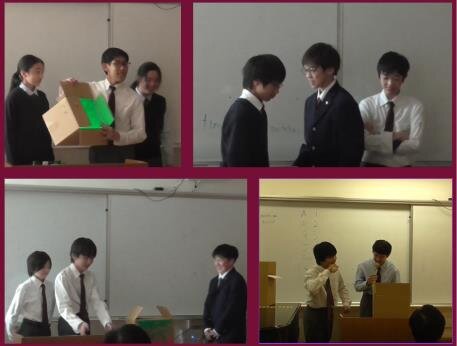
Rather than travelling off campus, students were able to experience a specialist-led drama workshop in a familiar learning environment with the support of a visiting guest drama teacher. The session focused on performance, creativity, and communication through English.
During the activity, students performed Kyōgen, a traditional Japanese style of comedy. The chosen play, Busu, was adapted and performed in English. Students worked collaboratively to understand the story framework and then created their own versions of the script, incorporating humour, expression, and timing suitable for performance. The final pieces were performed in front of their peers, giving students a valuable opportunity to present their work publicly.
All M1 and M2 students participated in this group activity, with teachers taking on a supporting and facilitating role throughout the session. The collaborative structure encouraged cooperation across classes and allowed students to learn from one another while working towards a shared goal.
This activity was organised because students had not had any exposure to drama earlier in the academic year. It was designed to give them a meaningful opportunity to experience drama while connecting with an aspect of Japanese cultural heritage. By performing Kyōgen in English, students were able to bridge their own cultural knowledge with language learning, using English as a practical tool for self-expression rather than just classroom study.
Students benefited in several important ways. They applied skills from Art and Design by creating props to support their performances. In English, they developed scripts using a basic structure, practising vocabulary, sentence formation, and collaboration. Most importantly, the activity supported the development of public speaking skills and confidence. Performing in front of peers helped students become more comfortable using English in real-world, expressive contexts.
From a teacher's perspective, it was rewarding to see students working actively in groups and using English in ways they had not previously experienced. Many students demonstrated confidence and creativity, revealing new aspects of their personalities. Their interpretations of busu, or the "forbidden item," were particularly imaginative and varied, making the performances engaging and insightful.
Student feedback was very positive. One M2 student noted that acting and performing allowed everyone to show different ideas of humour. An M1 student shared that designing the props was especially enjoyable and that watching other groups perform at the end made the experience even more fun.